
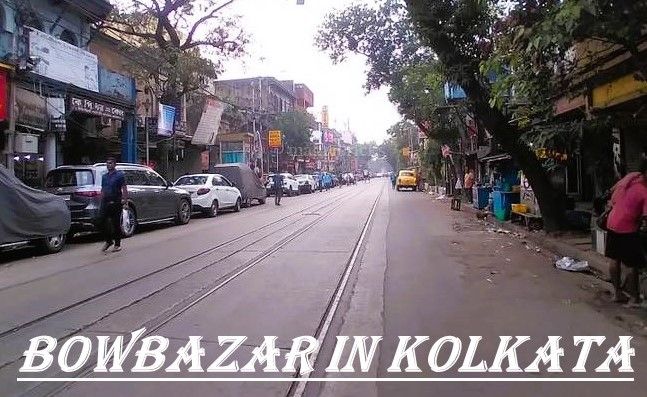
Bowbazar, located in the bustling core of central Kolkata, is a neighborhood that beautifully intertwines history, culture, and commerce. Though often described as congested and chaotic, its streets echo with stories of colonial leisure, multicultural exchanges, and thriving trade. Today, Bowbazar is best known as one of the city’s premier jewellery markets, but its layered past makes it far more than just a commercial center.
Location of Bowbazar
Bowbazar falls under the jurisdiction of the Central Kolkata Police Station in West Bengal. Its strategic position at the city’s core makes it a vital link between old Kolkata’s heritage and the modern developments shaping the metropolis. This centrality has ensured Bowbazar’s enduring importance both historically and commercially.
Geography of Bowbazar
Geographically, Bowbazar stretches eastward from Lal Bazar to Acharya Jagadish Chandra Bose Road, formerly known as Circular Road. This route once ran along the filled-in Mahratta Ditch, a defensive trench from colonial times. Early maps identified the locality as Boytaconnah Street, a direct reference to Baithakkhanna, highlighting its deep historical roots.
History of Bowbazar
Bowbazar’s history dates back to when Kolkata Was still a Cluster of Villages. It was a leisure and entertainment hub for the city’s elite, where merchants gathered under a large banyan tree before embarking on caravans toward the salt lakes and marshes.
A popular legend connects Job Charnock, regarded as the founder of Kolkata, with Bowbazar. It is said that he chose the site of the city after resting under the Baithakkhanna tree while smoking his pipe. This tree, marked in maps of 1794, later gave way to Sealdah station, forever linking Bowbazar with the romantic origins of Kolkata.
Naming of Bowbazar
The main street of Bowbazar was officially renamed Bepin Behari Ganguly Street in honor of Bipin Behari Ganguli, a revolutionary leader who endured nearly 24 years in British prisons before joining the Congress movement. Despite the renaming, the locality continues to be popularly known as Bowbazar, preserving its historical identity and cultural resonance.
Modern Bowbazar
In the 18th and 19th centuries, Bowbazar witnessed the arrival of Chinese immigrants, many of whom settled near Tiretta Bazar. Over time, several families moved to Tangra, establishing tanneries and giving rise to Kolkata’s famous Chinatown. While Tangra eventually became the cultural hub of the Chinese community, Bowbazar retained traces of this multicultural past.
Today, Bowbazar is Synonymous with Jewellery. Its bustling lanes are lined with shops selling gold, ornaments, and precious stones, making it one of Kolkata’s most important jewellery hubs. The locality’s crowded markets, rich cultural heritage, and thriving commerce make it a unique blend of history and modern trade.
Conclusion
Bowbazar is far more than a congested marketplace; it is a living museum of Kolkata’s evolution. From its beginnings as Baithakkhanna to its transformation into a jewellery hub, Bowbazar reflects the city’s layered history, cultural diversity, and thriving commerce. For both visitors and locals, Bowbazar remains a fascinating destination that connects the past with the present.