
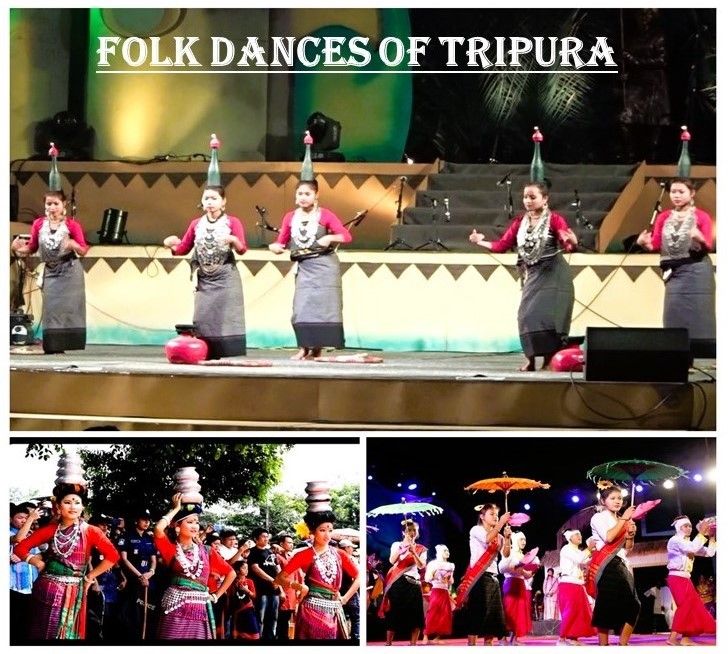
Tripura, a jewel of Northeast India, is admired not only for its breathtaking landscapes but also for its vibrant cultural heritage. The state is home to 19 tribal communities along with Bengali and Manipuri populations, each contributing to a rich mosaic of customs, rituals, and art forms. Among these, folk dances hold a special place, serving as expressions of devotion, joy, and community bonding. Performed during weddings, harvest festivals, religious ceremonies, and social gatherings, these dances embody the rhythm of life in Tripura and highlight the unity in diversity that defines its cultural identity.
Bizu Dance
The Bizu Dance of the Chakma community is Performed During Chaitra Sankranti, marking the end of the Bengali calendar year. It symbolizes bidding farewell to the old year and welcoming the new one. Accompanied by traditional songs and rituals, the dance creates an atmosphere of renewal and festivity.
Lebang Boomani Dance
The Lebang Boomani Dance, performed by the Tripuri community, is one of Tripura’s most iconic harvest dances. Using bamboo clappers, dancers mimic the act of catching colorful insects called lebangs. This performance beautifully illustrates the harmony between humans and nature while celebrating agricultural abundance.
Garia Dance
Closely tied to the Garia Puja, the Garia Dance is dedicated to the deity of wealth and prosperity. Through rhythmic movements and songs, the community expresses devotion and seeks blessings for a fruitful year ahead.
Hozagiri Dance
The Hozagiri Dance of the Reang community is renowned for its grace and complexity. Celebrated in April before Jhumcultivation, it honors Goddess Mainuma, the deity of wealth. Dancers balance clay jugs, bottles, and even lighted lamps while bending their bodies with remarkable precision, showcasing both artistry and devotion.
Jhum Dance
Reflecting the agricultural lifestyle of tribal communities, the Jhum Dance is considered a “working dance.” It motivates farmers to work harder while celebrating their traditions and collective spirit.
Hai Hak Dance
Performed by the Halam community, the Hai Hak Dance is linked to Jhum cultivation. At the end of the harvest season, dancers invoke Goddess Lakshmi for blessings. It serves as both a thanksgiving ritual and a joyous celebration of prosperity.
Sangrai Dance
The Mog community performs the Sangrai Dance during a three-day festival. Young members carry the sacred Kalpataru(Wish Yielding Tree) from house to house, accompanied by singing and dancing. This ritual strengthens community bonds and spreads festive cheer.
Gajan Dance
The Bengali community celebrates the Gajan festival with prayers to Lord Shiva. Performers dress as deities such as Shiva, Durga, and Kali, dancing to drumbeats and devotional songs. This vibrant display of faith blends spirituality with artistry.
Welcome Dance
The Lusai community performs the Welcome Dance to greet guests. Young girls, adorned in colorful costumes and fragrant flowers, create a lively and hospitable atmosphere. This dance reflects the warmth and generosity of Tripura’s people.
Dailo Nritya
Dailo Nritya is performed when harvested crops are brought home. The entire community participates, inviting neighbors and relatives to join in the celebration. It is a dance of joy, gratitude, and unity.
Galamuchamo Dance
The Tripuri community performs the Galamuchamo Dance at the end of the harvest season to thank the gods for prosperity. Dancers wear traditional attire and perform to the rhythm of local instruments, making it a deeply spiritual and cultural experience.
Conclusion
The folk dances of Tripura are more than artistic performances; they are living traditions that embody the state’s cultural richness. Each dance narrates stories of devotion, agriculture, hospitality, and unity. Together, they highlight the diversity of Tripura’s communities while reinforcing their shared heritage. These dances not only preserve age-old customs but also serve as vibrant reminders of the state’s identity, making Tripura a True Treasure Trove of culture and tradition.