
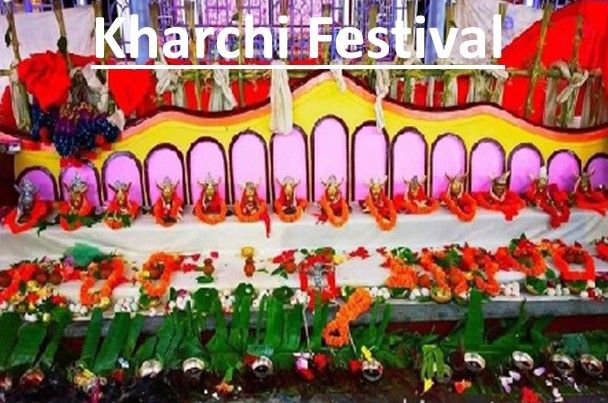
The Kharchi Festival, also known as Chaudda Devata Puja or Chaturdash, is one of the most revered religious and cultural events of Tripura. Celebrated with grandeur in Old Agartala, the former capital of King Krishna Manikya, this festival honors fourteen deities collectively known as the Chaturdash Devata. The rituals are performed by tribal priests, ensuring the preservation of age-old traditions that continue to shape Tripura’s spiritual identity.
Historical and Mythological Origins
The origins of Kharchi Puja are deeply rooted in mythology. According to legend, Tripura was once ruled by King Tripur, a tyrant whose cruelty drove the people to seek Lord Shiva’s intervention. Shiva defeated the king, but the absence of a ruler led to chaos. To restore order, Shiva assured that Queen Harabati would bear a son destined to bring prosperity. Meanwhile, she was instructed to worship fourteen deities:
- Lord Shiva (Hara)
- Lord Vishnu (Hari)
- Lord Ganesha (Siddidata)
- Lord Agni
- Goddess Uma
- Prithvi (Earth Goddess)
- Kama Deva
- Goddess Lakshmi
- Lord Brahma
- Goddess Saraswati
- Lord Kartikeya
- Goddess Ganga
- Samudra (Ocean God)
- Himalaya (God of Hills)
Additionally, Burama is worshipped during the festival, believed to bless women with fertility. This Blend of Myth and Ritual highlights the festival’s profound spiritual significance.
Timing and Duration
Kharchi Puja is observed during Suklastami, the eighth day of the moonlit fortnight in the month of Ashar (June–July). The celebration lasts for seven days, turning Old Agartala into a vibrant hub of devotion, cultural exchange, and social gathering.
Rituals and Practices
The rituals of Kharchi Puja are distinctive and symbolic, reflecting both tribal and Hindu traditions:
- Stone idols: The fourteen deities are represented by stone idols placed in a hut open on all sides, built on a raised plinth.
- Priestly worship: Conducted by priests known as Galim, who perform these sacred duties only during Kharchi Puja.
- Women’s devotion: Married women apply vermilion, light candles, and offer prayers to Goddess Burama, seeking blessings for fertility.
- Goat sacrifice: A defining ritual involves sacrificing goats. The priests retain the head of the animal, while the body is returned to the devotee. Portions of flesh and blood are offered to the fourteen deities.
Cultural Significance
The Kharchi Festival is more than a religious observance; it is a cultural celebration that bridges tribal traditions and Hindu practices. It reflects Tripura’s diverse heritage and fosters unity among communities. People from different castes and backgrounds participate, reinforcing the spirit of inclusiveness and harmony.
Social Impact
Beyond its spiritual essence, Kharchi Puja strengthens social bonds and preserves age-old traditions. It serves as a platform for collective worship and cultural identity, while also promoting cultural tourism in Tripura. The festival’s grandeur and rituals make it a vital part of the state’s social fabric, attracting visitors and scholars alike.
Conclusion
The Kharchi Festival stands as a testament to Tripura’s rich cultural and religious legacy. Rooted in mythology, enriched by rituals, and Celebrated with Devotion, it continues to embody the interconnectedness of divine forces and human life. By honoring fourteen deities, the festival ensures prosperity, fertility, and harmony for generations to come.