
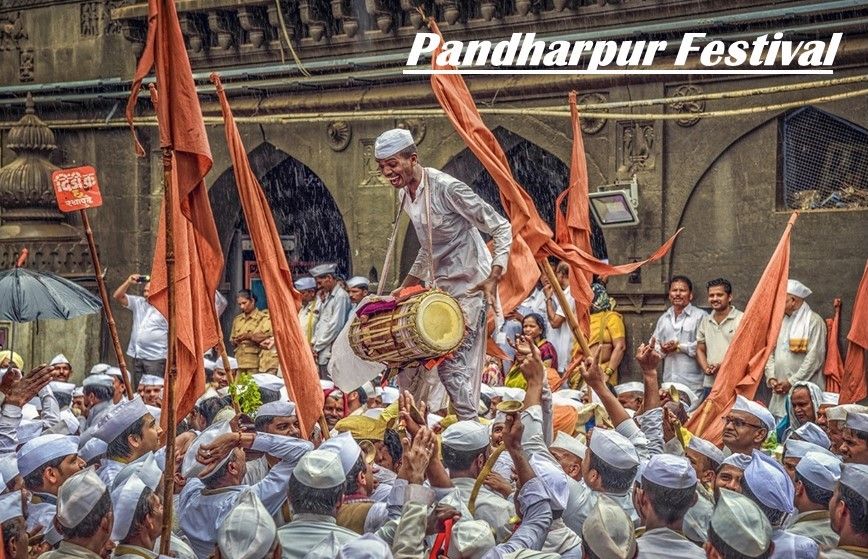
Pandharpur, nestled in the Solapur district of Maharashtra, is one of India’s most revered pilgrimage destinations. Known as the sacred abode of Vithoba also called Panduranga, Vitthala, or Pandhari the town holds a central place in the Bhakti movement. Situated along the banks of the Bhima River, Pandharpur’s spiritual magnetism is anchored in its iconic Temple of Vithoba, which draws millions of devotees annually.
The Temple of Vithoba
The temple complex is vast, with six gates, the most prominent being the Namdev gate on the eastern side. At its core lies the sanctum, housing the standing image of Vithoba a manifestation of Vishnu or Krishna. What makes this depiction unique is The Deity Standing On a Brick, a symbol deeply tied to Pandharpur’s legends and traditions.
Origins and Legends
The worship of Vithoba is deeply rooted in Puranic texts and enriched by saints such as Dnyaneshwar, Namdev, Eknath, and Tukaram between the 13th and 17th centuries.
A cherished legend tells of Pundalik, whose devotion to his parents impressed Krishna. When Krishna visited him, Pundalik offered a brick for the god to rest upon. Pleased, Krishna chose to remain in Pandharpur as Vithoba. This explains why the deity’s image stands on a brick a symbol of humility and surrender central to the Warkari tradition. Interestingly, the word “Vitthala” is believed to derive from “Vittu,” meaning brick in Marathi and Kannada.
The Pandharpur Festival
The grandest celebration in Pandharpur is the Ashadhi Ekadashi Wari, which attracts lakhs of devotees. Introduced in 1685 by Narayan Baba, the youngest son of Tukaram, the Palkhi tradition became a defining feature of the festival.
Palanquins carrying the padukas (footprints) of saints journey across Maharashtra to converge at Pandharpur. The most prominent Palkhis are those of Dnyaneshwar from Alandi and Tukaram from Dehu, followed by Nivrittinath from Tryambakeshwar and Eknath from Paithan. The festival begins in Jyeshtha and lasts nearly three weeks, culminating on the 11th day of Ashadh when the Palkhi reaches Pandharpur. The temple complex reverberates with chants of “Jai Vithoba-Rakhumai!”
The Warkari Tradition
The Warkaris are devotees who undertake the holy pilgrimage known as Wari. Walking for days, they chant “Dnyanba Tukaram”, embodying humility, equality, and devotion. The procession, called Dindi, is accompanied by bhajans and kirtans, creating an atmosphere of collective spirituality.
The festival is not limited to Ashadh; it is also Celebrated During Karthik Ekadashi in November-December, with smaller feasts in April. Each celebration strengthens the bond between devotees and Vithoba, making Pandharpur a living symbol of Maharashtra’s spiritual heritage.
Conclusion
The Pandharpur Festival is more than a religious gathering; it is a cultural phenomenon that embodies devotion, humility, and community spirit. The chants, the Palkhi, and the unwavering faith of the Warkaris transform Pandharpur into a vibrant hub of spirituality. It stands as a timeless reminder of the power of Bhakti and the enduring legacy of saints who shaped Maharashtra’s spiritual landscape.