
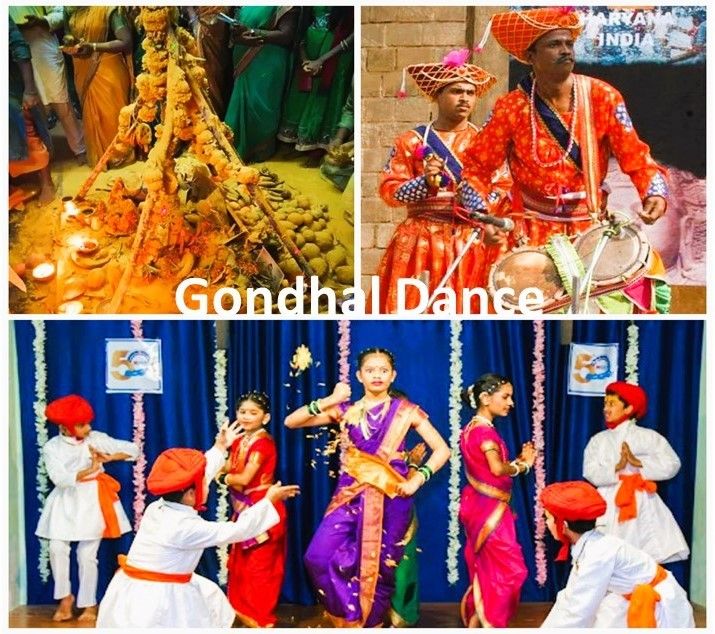
Gondhal is one of Maharashtra’s most distinctive folk traditions, combining worship, storytelling, and performance into a ritual that is both spiritual and entertaining. Performed exclusively by men, Gondhal is staged after important ceremonies such as marriages or the birth of a child. The word “Gondhal” literally means “commotion,” and the performance lives up to its name through loud devotional singing, dramatic narration, and lively dance movements. The performance of Gondhal is not only a cultural spectacle but also a sacred act of invoking the Goddess and celebrating community traditions.
Structure of Gondhal Performance
The Performance of Gondhal alternates between devotional singing and dramatic storytelling. The Gondhalis, or performers, are considered successors of ancient narrators such as the Caranas, Bhatas, and Pauranikas, who recited epics and myths. Gondhal typically comprises stories from the Ramayana, Mahabharata, or the Puranas, often enriched with interpolations and improvisations.
The narration proceeds without a written script, relying instead on oral tradition. Dialogues, jokes, songs, dances, and prose commentary are woven together to create a lively and engaging performance. This improvisational style allows Gondhal to remain flexible and dynamic, adapting to the audience and occasion while retaining its devotional essence.
Dance and Movements
The Gondhal dance is characterized by circular, spinning movements performed with great energy. The performers use mudras, or symbolic hand gestures, to convey meaning and emotion. These movements are not random but follow fixed conventions that have been passed down through generations.
The chief Gondhali plays a central role in the performance. Holding a flaming torch, he leads the dance and sets the rhythm for his companions. The torch symbolizes divine energy and adds a dramatic visual element to the ritual. The spinning movements, combined with the torchlight, create a mesmerizing effect that captivates the audience and enhances the devotional atmosphere.
Musical Accompaniment
Music is an integral part of Gondhal. The chief Gondhali is accompanied by three to six comrades who play traditional instruments. These include the tal (cymbals), sambal and chaundke drums, the conch shell, and the stringed tuntune. Together, these instruments produce a powerful and rhythmic sound that drives the performance.
The music alternates between devotional songs and mythological narratives, with equal emphasis on social themes. The combination of instruments, chanting, and dance creates a vibrant atmosphere that is both entertaining and spiritually uplifting.
Storytelling and Themes
The storytelling aspect of Gondhal is central to its performance. Stories from epics like the Ramayana and Mahabharata are narrated with dramatic flair, often interspersed with humor and social commentary. This blend of mythological and social themes makes Gondhal relevant to both religious devotion and everyday life.
The performers use dialogues and jokes to engage the audience, ensuring that the ritual is not only sacred but also enjoyable. By combining mythological tales with contemporary references, Gondhal serves as a medium of cultural education, passing down values and traditions through performance.
Cultural Significance
The performance of Gondhal is more than just entertainment; it is a ritual of devotion and community bonding. It reinforces cultural identity, preserves oral traditions, and provides spiritual reassurance to families. The combination of music, dance, and storytelling makes Gondhal a holistic art form that continues to thrive in Maharashtra’s cultural landscape.
Conclusion
The performance of Gondhal is A unique blend of devotional singing, dramatic storytelling, and ritualistic dance. With its circular movements, symbolic mudras, powerful music, and mythological narratives, Gondhal stands out as one of Maharashtra’s most cherished folk traditions. It is not only a ritual of worship but also a cultural treasure that educates, entertains, and unites communities. By keeping alive the stories of the past and invoking divine energy, Gondhal continues to enrich the spiritual and Cultural Heartbeat of Maharashtra.