
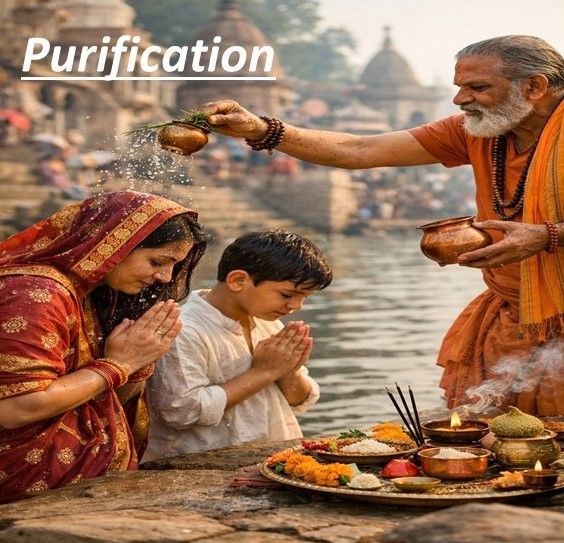
Purification, understood as the removal of ritual pollution, has been a cornerstone of Hindu practice for centuries. Particularly in Southern India, these customs reflect a profound concern for spiritual cleanliness and the belief that certain life events or cosmic phenomena create states of impurity requiring ritual cleansing. Though diverse across communities, these practices reveal the intricate relationship between spirituality, social order, and cosmic balance.
Birth and Pollution
The arrival of a child is celebrated with joy but also regarded as spiritually complex. In traditional belief, Childbirth Introduces Impurity into The Family. If the newborn is a girl, the parents are considered polluted; if a boy, the entire group of Dayadis (agnatic relatives) shares the impurity. For ten days, they are treated as untouchables, and even household vessels touched by them must be cleansed before reuse. The mother remains under pollution for several months, restricted from household duties. This paradox of childbirth — sacred yet requiring purification — reflects the need to restore balance between the sacred and the social.
Menstrual Pollution
Menstruation is another event linked to ritual impurity. Women traditionally observe three days of seclusion, practicing distant pollution. Afterward, they bathe in a river or tank and ritually taste rice and salt before rejoining family life. Folklore warns that if a woman sees a child before this act, the child may weaken or die. These customs intertwine ritual purity with concerns about fertility, health, and family well-being, underscoring the symbolic weight of menstruation in Hindu thought.
Death and Pollution
The death of a family member is considered a profound source of pollution. Relatives remain impure for ten days, with purification achieved only after bathing and performing ceremonies for the deceased. This reflects Hindu views of death as a powerful transition affecting both the departed soul and the living, requiring ritual acts to restore harmony between worlds.
Sleep as Pollution
Interestingly, sleep is regarded as a form of temporary death. Upon waking, one must bathe to remove the pollution of sleep. Those who have bathed should not be touched by those who have not, reinforcing the fragile nature of purity and its easy disturbance.
Eclipse Pollution
Celestial events such as eclipses are also seen as sources of impurity. After an eclipse, everyone — young and old, male and female — must bathe. Until they do, they are considered impure and cannot touch those who have already purified themselves. This practice highlights the cosmic dimension of Hindu beliefs, where celestial phenomena directly influence human ritual life.
Permanent Pollution
Historically, certain communities such as the Chandalas were regarded as permanently polluted due to birth. Contact with them was believed to transmit impurity, requiring bathing and sometimes renewal of the sacred thread. While this reflects the social stratification embedded in ritual practices, modern Hindu society increasingly challenges such notions, emphasizing equality and spiritual inclusivity.
Conclusion
Purification rituals in Hinduism embody a complex interplay of spirituality, social order, and cosmic belief. Whether tied to birth, menstruation, death, or natural events like eclipses, these customs stress the importance of maintaining ritual purity. While some practices continue today, others are evolving under modern interpretations of health, equality, and spirituality. Yet, the underlying theme remains: purification is not merely Physical but Deeply Symbolic, representing the restoration of harmony between the individual, society, and the cosmos.