
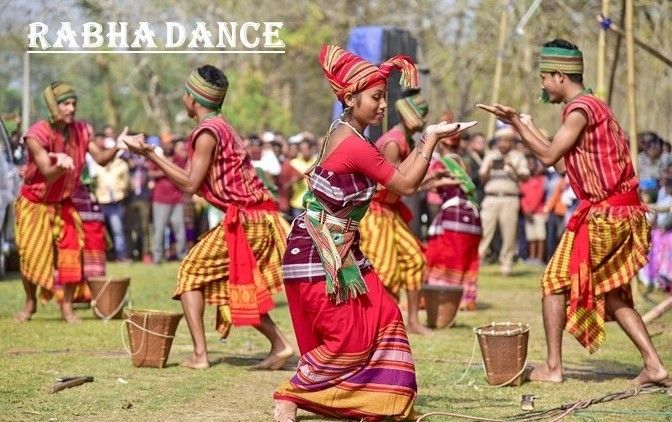
The Rabha dance tradition is one of the most cherished cultural practices of the Rabha tribes, who inhabit the Garo Hills of Meghalaya and parts of Assam. These dances are not simply artistic expressions but are deeply embedded in the spiritual and social life of the community. They reflect the tribe’s agrarian lifestyle, ritualistic customs, and collective identity. After every ritual, Rabhas gather to perform dances that express gratitude, seek blessings, and strengthen communal bonds. Among the many forms of Rabha dances, the Hamjar Dance and the Farkanti Dance stand out for their symbolism and cultural depth.
The Agrarian Spirit: Hamjar Dance
The Hamjar Dance, also known as the Girkay Dance, highlights the Rabhas’ close connection with agriculture. Since most of the Rabha community resides in hilly regions, shifting cultivation has long been their primary method of farming. This dance celebrates the collective effort of agricultural work, where men and women join hands in cultivating paddy fields.
During the performance, dancers carry agricultural tools, symbolizing their daily labor and respect for the land. The rhythmic steps are accompanied by traditional songs and music, which not only entertain but also motivate farmers during their tasks. The communal singing and dancing transform strenuous labor into a joyful, shared experience. In essence, the Hamjar Dance is a cultural testimony to the Rabhas’ agrarian lifestyle, portraying farming as both a livelihood and a sacred duty.
Honoring the Departed: Farkanti Dance
In contrast to the agricultural theme of the Hamjar Dance, the Farkanti Dance is performed during times of mourning. It is specifically intended to console and uplift the family of a recently deceased member. Through this ritual, the community demonstrates solidarity, ensuring that grief is collectively shared and softened.
The symbolism of the dance is powerful. Female dancers carry swords and shields, representing strength and protection, while male dancers hold the Manchelengka, the emblem of the Rabhas, signifying identity and continuity of tradition. The performance is spirited rather than somber, designed to cheer up the bereaved family and remind them of resilience in the face of loss. By blending martial elements with cultural emblems, the Farkanti Dance conveys both respect for the departed and encouragement for the living.
Cultural Significance
Rabha dances are more than artistic displays; they are cultural narratives that embody the values, struggles, and aspirations of the tribe. Each performance is a collective act, reinforcing unity and shared identity. Whether celebrating harvests or comforting families in grief, these dances highlight the Rabhas’ philosophy of community living, where joy and sorrow are experienced together.
Furthermore, these dances preserve oral traditions, music, and symbolic gestures that have been passed down through generations. They act as cultural archives, ensuring that younger members of the tribe remain connected to their roots. In modern times, Rabha dances are also performed at festivals and cultural events, showcasing the tribe’s rich heritage to wider audiences and promoting intercultural understanding.
Conclusion
The Rabha dances of Meghalaya, particularly the Hamjar and Farkanti, are profound expressions of life, labor, and loss. They illustrate how art and ritual intertwine in tribal societies, transforming everyday experiences into meaningful cultural practices. For the Rabhas, dance is not merely performance it is prayer, remembrance, and celebration. By continuing these traditions, the Rabha tribes preserve their ancestral wisdom and reaffirm their identity within The Diverse Cultural Mosaic of India.