
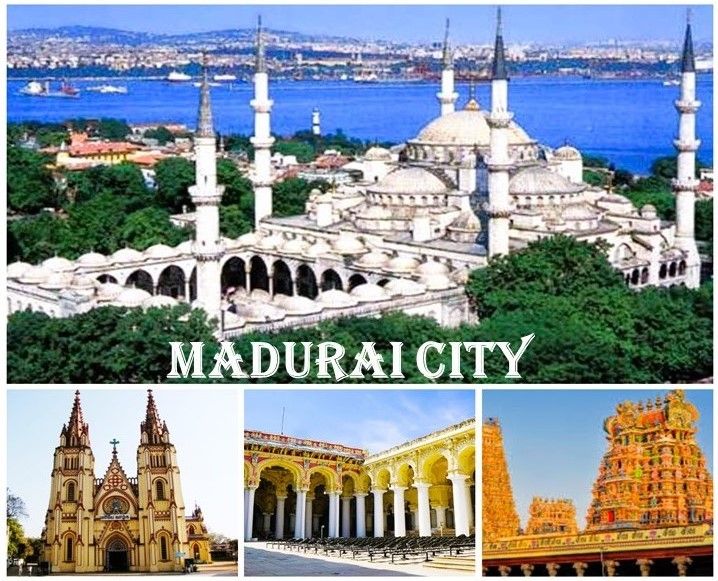
Madurai, one of the oldest cities in Tamil Nadu, is renowned not only for its cultural and historical significance but also for its diverse religious sites and architectural marvels. The city is A Spiritual Hub where Hindu Temples, mosques, and churches coexist, reflecting its rich heritage and pluralistic traditions.
Major Religious Sites in Madurai
- Meenakshi Amman Temple: Located on the southern bank of the Vaigai River, this historic Hindu temple is dedicated to Goddess Meenakshi and Lord Sundareshwara (Shiva). It is the most iconic landmark of Madurai, celebrated for its towering gopurams, intricate sculptures, and vibrant festivals.
- Koodal Azhagar Temple: A Vishnu temple situated in the heart of the city, it houses idols of the Navagraham (nine planetary deities). The temple is revered for its spiritual significance and its Dravidian architectural style.
- Kazimar Big Mosque: The oldest Muslim place of worship in Madurai, built in the 13th century. Inside the mosque lies the Madurai Maqbara, a dargah dedicated to revered Sufi saints.
- Goripalayam Mosque: Another prominent Islamic site, located in Goripalayam, known for its large dome and historical importance.
- St. Mary’s Cathedral: The seat of the Roman Catholic Archbishop of Madurai, this church is a significant Christian site, blending European architectural influences with local traditions.
These sites highlight Madurai’s religious diversity, making it a city of spiritual harmony.
Architecture of Madurai
Madurai’s architectural heritage dates back to the 7th century BCE, when it was the capital of the Pandya dynasty. Over centuries, the city witnessed the influence of various rulers, each leaving their mark on its structures.
- Pandya Dynasty: The Pandyas built many temples, including early structures of the Meenakshi Temple.
- Delhi Khilji Dynasty (14th century): Madurai briefly became a Muslim kingdom, introducing Islamic architectural elements.
- Vijayanagar Dynasty: Restored Madurai as a Hindu holy land, emphasizing temple construction.
- Nayak Dynasty (1565–1781): Considered the golden age of Madurai’s architecture. Under rulers like Thirumala Nayaka, the Meenakshi Temple and the Thirumalai Nayaka Palace were constructed.
Key Architectural Highlights
- Mariamman Teppakulam: A man-made square tank as large as the temple precincts, with a central island featuring pavilions and a vimana. It reflects Hindu architectural style and is used for temple festivals.
- Meenakshi Sundareshwara Temple: Famous for its twelve gopurams, including the towering south gopura at 48 meters. The temple precincts include the Golden Lotus Tank, a thousand-pillared hall, and intricately sculpted mandapas. Its heavily engraved walls reflect Vijayanagara artistry, though sometimes considered overly ornate. The gold-plated shrines and towering turrets exemplify Dravidian architecture at its zenith.
- Thirumalai Nayaka Palace: Once a massive structure, today only a pillared hall and dance hall remain. Its style blends Hindu, Islamic, and European influences, making it distinct from temple architecture.
Conclusion
Madurai Religious Sites and architectural wonders embody its identity as a city of devotion, diversity, and artistry. From the grandeur of the Meenakshi Temple to the simplicity of mosques and churches, Madurai reflects centuries of cultural evolution. Its temples, palaces, and sacred tanks stand as living monuments to the city’s spiritual and architectural brilliance, making Madurai a timeless destination for pilgrims, historians, and travelers alike.