
Introduction
The Mishing tribes, also known historically as Miris, are one of the prominent indigenous communities of Northeast India. Distributed across villages in the Paglam circle and other regions, they share cultural similarities with the Adi tribe of Arunachal Pradesh. The Mishings are organized into loosely-knit groups, each comprising several clans bound by close blood relations. Every clan carries a distinct surname, and they practice clan-exogamy, ensuring marriages occur outside one’s clan. Monogamy is the most common form of marriage, though polygamy is occasionally observed. Their society is patriarchal, with descent traced through the male line, and sons inherit family property. Cross-cousin marriages are prevalent, with Midang and Dugla-lanam being the traditional marriage forms.
Historical Background
The Mishings originally inhabited the hilly tracts of Arunachal Pradesh. During the medieval period, they migrated and settled in the fertile valleys of Assam, particularly along the banks of the Brahmaputra River. Today, they are concentrated in districts such as Dibrugarh, Tinsukia, Jorhat, Sibsagar, Darang, North Lakhimpur, Dhemaji, Sonitpur, and Golaghat. Their migration to the plains allowed them to adapt to new agricultural practices and integrate with the broader Assamese society while retaining their distinct identity.
Social Organization
Mishing society is deeply rooted in kinship and clan structures. Each clan maintains its own traditions and taboos, and marriages are carefully regulated to preserve harmony. The patriarchal system places authority in the hands of male elders, who guide family and community decisions. Property inheritance follows the male line, reinforcing the importance of sons in continuing family legacy. Despite these traditional norms, the Mishings exhibit flexibility in adapting to modern influences while safeguarding their cultural heritage.
Marriage Customs
Marriage among the Mishings is not merely a union of two individuals but a social institution binding families and clans. The practice of cross-cousin marriage reflects their emphasis on strengthening kinship ties. Midang marriages involve elaborate rituals and community participation, while Dugla-lanammarriages are simpler, often arranged when circumstances demand less ceremony. These customs highlight the balance between tradition and practicality in their social life.
Festivals and Religion
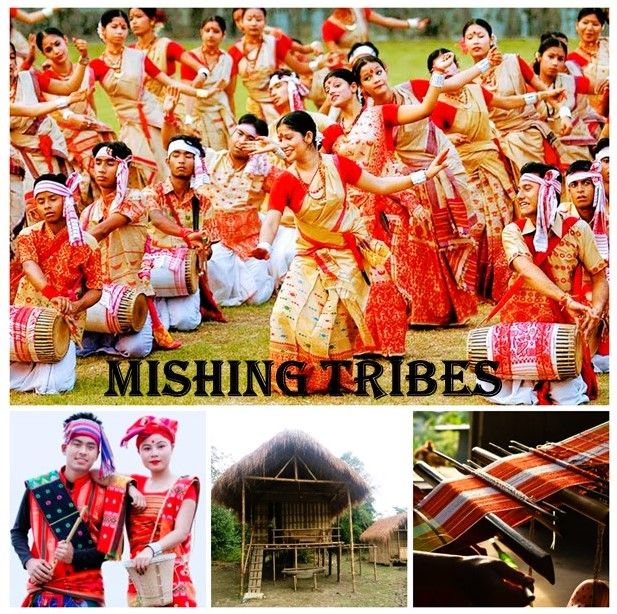
The Mishings celebrate vibrant socio-religious festivals that reinforce community bonds. Ali-Aye-Ligang, their most important agricultural festival, marks the beginning of the sowing season. It is celebrated with dance, music, and feasting, symbolizing fertility and prosperity. Another significant festival is Porag, which involves collective rituals, offerings, and merrymaking. Their religious practices blend animism with Hindu influences, reflecting centuries of cultural interaction. Deities associated with nature, fertility, and ancestors are revered, underscoring their close relationship with the environment.
Language and Culture
The Mishing language belongs to the Tani group of languages, linking them linguistically to tribes of Arunachal Pradesh. While many Mishings are bilingual in Assamese, their mother tongue remains a vital marker of identity. Traditional attire includes handwoven garments, with women wearing ege (wrap-around skirts) and men donning simple cotton clothing. Music and dance form an integral part of their cultural expression, often performed during festivals and social gatherings.
Contemporary Society
Today, the Mishings constitute a significant portion of Assam’s tribal population. They continue to preserve their customs while embracing education, Modern Agriculture, and political participation. Efforts are being made to document and promote their language, folklore, and traditions to ensure cultural continuity. Despite challenges posed by modernization and migration, the Mishings remain resilient, proud of their heritage, and committed to sustaining their unique way of life.