
Introduction
India’s cultural identity has always been shaped by religion, customs, and traditions. While these elements enriched the nation’s heritage, they also fostered social evils such as superstition, caste discrimination, and gender inequality. To challenge these injustices, Indian social reformers emerged as pioneers of progress, striving to create a more just and equitable society. Their efforts ranged from promoting women’s education and widow remarriage to fighting untouchability and advocating equality. Using accessible methods like songs, poetry, moral tales, and community initiatives, they educated the masses and inspired transformation.
Eminent Reformers of India
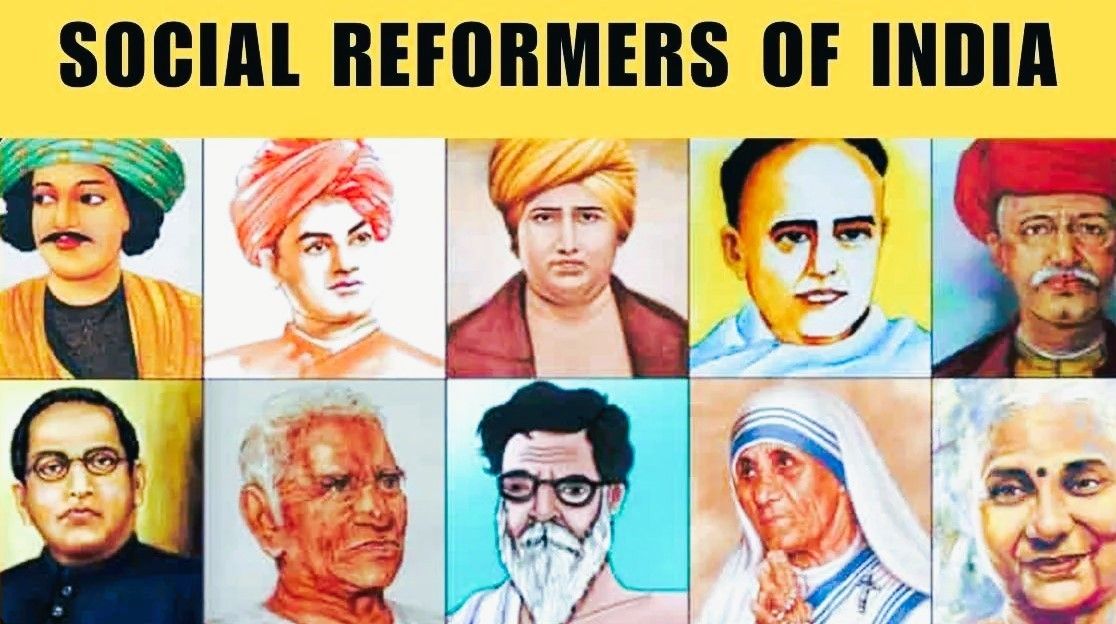
The contributions of reformers were recognized even during colonial rule, as they popularized modern education and challenged oppressive practices. Personalities such as Raja Ram Mohan Roy, Swami Vivekananda, Dayanand Saraswati, Ishwar Chandra Vidyasagar, Jyotirao Phule, B.R. Ambedkar, Vinoba Bhave, Begum Rokeya, and Mahatma Gandhi played pivotal roles in shaping modern India.
Raja Ram Mohan Roy
Known as the “Father of Modern India,” Roy spearheaded the abolition of sati, child marriage, and polygamy. As the founder of the Brahmo Samaj, he fought for women’s inheritance rights and promoted rational thought. His vision earned him the title of architect of the Indian Renaissance.
Swami Vivekananda
Though not a direct reformer, Vivekananda’s speeches and writings inspired youth to embrace strength and self-confidence. He preached Neo-Vedanta, a modern interpretation of Hinduism, and popularized yoga and meditation worldwide, elevating Indian spirituality on the global stage.
Swami Dayanand Saraswati
Founder of the Arya Samaj, Dayanand Saraswati emphasized a return to Vedic teachings. He opposed idol worship and superstition, advocating rationality, education, and equality as the foundation of reform.
Jyotirao Phule
A champion of the oppressed, Phule fought against caste discrimination and child marriage. Alongside his wife, Savitribai Phule, he pioneered women’s education by opening schools for girls. He also supported widow remarriage and established homes for distressed women, making him a true visionary.
Dr. B.R. Ambedkar
Ambedkar’s reforms focused on eradicating untouchability and uplifting marginalized communities. As the principal architect of the Indian Constitution, he enshrined equality, justice, and fundamental rights. His advocacy extended to women’s rights and labor reforms, and he inspired the Dalit Buddhist movement.
Vinoba Bhave
A disciple of Gandhi, Bhave launched the Bhoodan Movement, urging landowners to donate land to the landless. His lifelong commitment to Gandhian principles made him a prominent humanist and reformer.
Ishwar Chandra Vidyasagar
A polymath and reformer, Vidyasagar campaigned for widow remarriage, leading to the Widow Remarriage Act. He also simplified the Bengali alphabet, making education more accessible to ordinary people.
Begum Rokeya
A pioneer of women’s liberation in South Asia, Rokeya championed female education and equality. Her writings condemned gender discrimination and emphasized rationality. Bangladesh honors her legacy annually on Rokeya Day.
Other Reformers
Figures like Kavi Nazrul Islam, who opposed bigotry through poetry, and Basavanna, a 12th-century philosopher who advocated equality and dignity of labor, also left lasting impacts. Reformers such as Pandita Ramabai Sarasvati, Baba Amte, Narayana Guru, and Kandukuri Veeresalingam further enriched India Reformist Tradition.
Conclusion
The tireless efforts of Indian social reformers transformed society, leading to the abolition of harmful practices, the promotion of women’s education, and the empowerment of marginalized communities. Their legacy continues to inspire modern India, where equality, justice, and education remain central to progress. These reformers were not merely critics of social evils but visionaries who laid the foundation for a humane and enlightened nation.