
Introduction
Mysore, also known as Mysuru, is one of the most ancient and culturally rich cities of India. Rooted in legends of Goddess Durga’s victory over the demon Mahishasura, the district is a treasure trove of palaces, temples, wildlife sanctuaries, and architectural marvels. Tourists flock to Mysore not only for its historical significance but also for its natural beauty and spiritual heritage.
Chamundi Hill
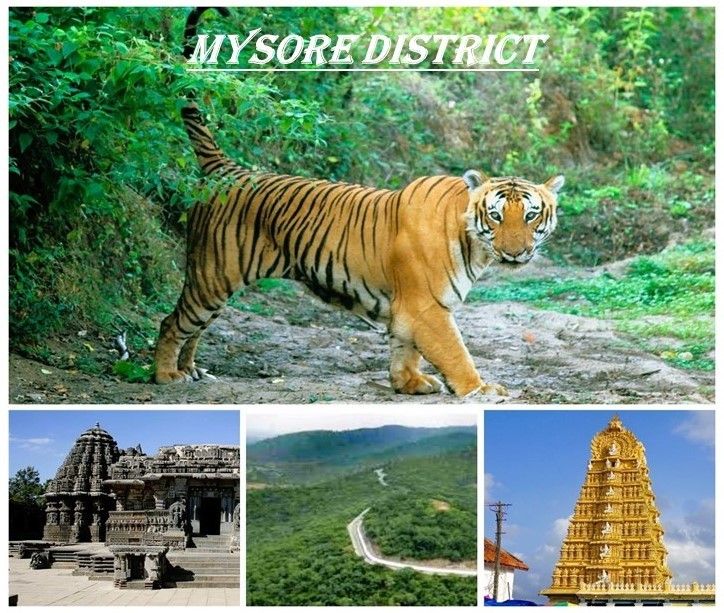
Located 13 km from Mysore City, Chamundi Hill rises to an elevation of about 1,000 meters. According to legend, Goddess Chamundeshwari (an incarnation of Durga) slew the demon Mahishasura here, giving Mysore its name. The hill houses the grand Chamundeshwari Temple, a major pilgrimage site. Halfway up the hill lies the colossal statue of Nandi, the sacred bull, carved from a single piece of basalt.
Srirangapatna
Srirangapatna, once the capital of Tipu Sultan’s empire, is steeped in history. The town is surrounded by the Kaveri River and features Tipu Sultan’s palace, dungeons, and the tomb of Hyder Ali. The place also has a museum showcasing artifacts from Tipu’s reign, making it a must-visit for history enthusiasts.
Ranganatha Temple
The Sri Ranganatha Temple, revered since the time of sage Gautama, is a significant pilgrimage site near Mysore. Dedicated to Lord Vishnu, it is an important center of worship. Nearby lies the Ranganathittu Bird Sanctuary, which attracts migratory birds and offers a serene environment for nature lovers.
Ranganathittu Wildlife Sanctuary
Just 3 km from Srirangapatna, this sanctuary is spread across islets in the Kaveri River. It is famous for its bird population, including storks, herons, and kingfishers. The sanctuary provides a picturesque setting and is a paradise for bird watchers.
Bandipur Tiger Reserve
Located 80 km from Mysore, Bandipur is one of India’s premier tiger reserves developed under Project Tiger. Apart from tigers, the reserve is home to elephants, leopards, and diverse flora and fauna. It is a popular destination for wildlife tourism and eco-tourism.
Somnathpur
Somnathpur, about 35 km from Mysore, is renowned for the 13th-century Keshava Temple, a masterpiece of Hoysala architecture. The temple features intricately carved sculptures, friezes of elephants and horsemen, and depictions from Hindu epics. Its star-shaped design and triple shrines make it a unique architectural wonder.
Shivanasamudra
Situated 80 km from Mysore, Shivanasamudra is famous for its twin waterfalls Gaganachukki and Barachukki formed by the Kaveri River. The site also holds historical importance as the location of India’s first hydroelectric power project. The scenic beauty and temples here make it a popular tourist spot.
Pilgrimage Tourism
Mysore district is dotted with temples and churches of historical and spiritual importance:
- Chamundi Hills Temple: Dedicated to Goddess Chamundeshwari, with a gopura built by Krishnaraja Wodeyar III.
- Nandi Statue: A massive monolithic bull statue halfway up Chamundi Hill.
- St. Philomena’s Church: Built in 1840 and redesigned in Gothic style in 1933, featuring twin towers and stained glass windows depicting biblical scenes.
- Somnathpur Temple: A fine example of Hoysala architecture with exquisite carvings and sculptures.
Conclusion
Mysore District offers a blend of history, spirituality, and natural beauty. From Chamundi Hill’s mythological significance to The Architectural Brilliance of Somnathpur and the wildlife richness of Bandipur, the district caters to diverse interests. Whether one seeks pilgrimage, adventure, or cultural exploration, Mysore remains a timeless destination that embodies the heritage of Karnataka.