
Introduction
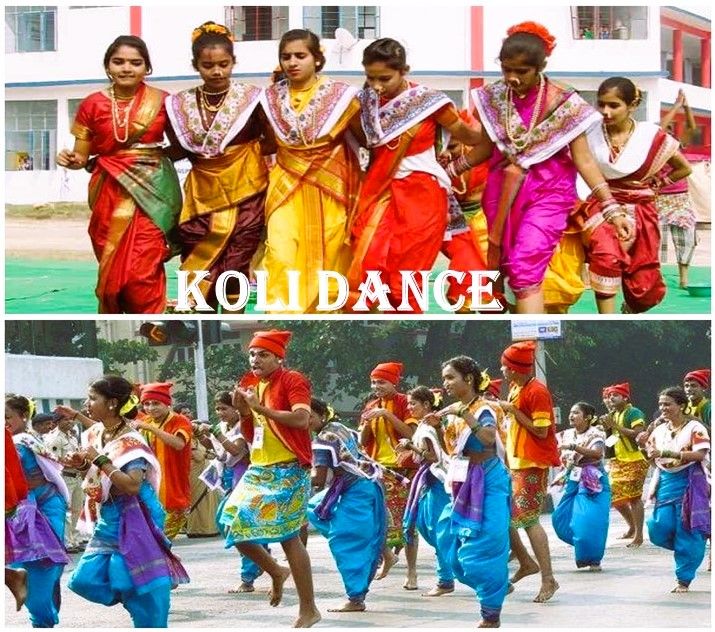
The Koli Dance is one of the most vibrant folk traditions of Maharashtra, performed by The Koli Community, who are traditionally fishermen. This dance is not only a celebration of their livelihood but also a reflection of their rich cultural heritage. Among the many elements that make this dance unique, the costumes worn by the performers stand out as a striking symbol of identity, tradition, and artistry. The attire of both male and female dancers is carefully chosen to represent their community’s lifestyle, values, and aesthetic sensibilities.
Female Costumes
The female dancers of the Koli Dance are generally dressed in traditional green-coloured saris. These saris are draped in a distinctive style, often tied up to the knee, which allows ease of movement during the energetic dance steps. The green colour symbolizes prosperity and harmony, resonating with the community’s close connection to nature and the sea.
To enhance their appearance, women adorn themselves with ornaments such as necklaces, earrings, and bangles. These accessories are not merely decorative but also signify cultural pride and femininity. The jewelry often reflects traditional Maharashtrian designs, adding authenticity to the performance. The overall look of the female dancers is both graceful and practical, enabling them to participate actively in the lively dance while maintaining elegance.
Male Costumes
In contrast, the male performers wear lungis around their waists. The lungi is tied in such a way that it forms a triangular shape, which is distinctive to the Koli Dance. This attire is simple yet functional, reflecting the fishermen’s daily lifestyle. The lungi allows freedom of movement, which is essential for the vigorous and rhythmic steps performed during the dance.
The men may also wear simple shirts or remain bare-chested, depending on the occasion and setting of the performance. Their attire emphasizes strength, agility, and a connection to their traditional occupation. The male costume complements the female attire, creating a harmonious visual balance on stage.
Cultural Significance
The costumes of the Koli Dance are not just garments; they are cultural symbols that narrate the story of the Koli community. The green sari and ornaments of the women highlight beauty, prosperity, and tradition, while the lungi of the men reflects simplicity, resilience, and practicality. Together, these costumes embody the essence of the community’s life by the sea, their struggles, and their celebrations.
Moreover, the costumes enhance the visual appeal of the dance. The vibrant colours, sparkling jewelry, and dynamic draping styles catch the audience’s attention and make the performance more engaging. They also help preserve the authenticity of the dance, ensuring that the cultural heritage of the Koli community is passed down through generations.
Conclusion
The Costumes of the Koli Dance are integral to its identity and charm. They are not merely outfits but cultural artifacts that represent the values, traditions, and lifestyle of the Koli community in Maharashtra. By wearing these costumes, the dancers pay homage to their ancestors and keep their folk traditions alive. The attire, combined with the rhythmic music and energetic movements, makes the Koli Dance a captivating expression of Maharashtra’s rich cultural tapestry.
In essence, the costumes of the Koli Dance are a celebration of heritage, blending practicality with artistry, and ensuring that this folk tradition continues to thrive as a vibrant symbol of music, dance, and culture.