
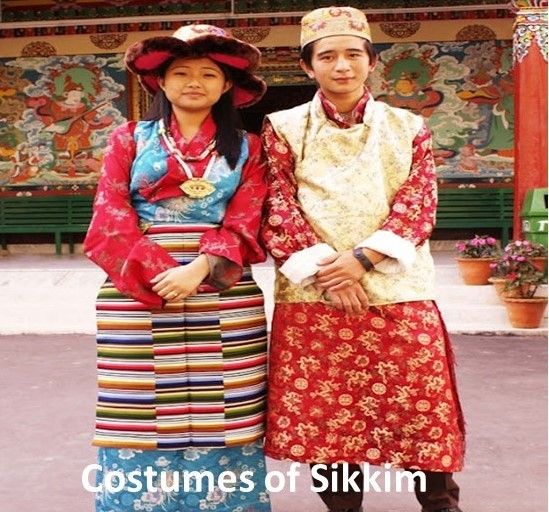
Sikkim, a small Himalayan state in Northeast India, is a melting pot of diverse cultures and communities. While the Lepcha, Bhutia, and Nepali groups form the core of its indigenous population, several other communities such as the Marwari, Bihari, Bengali, and Punjabihave also made Sikkim their home. These groups, having migrated over time for trade, work, and settlement, have enriched the cultural fabric of the state with their own distinctive costumes and traditions. Their Attire Reflects both Continuity of Heritage and adaptation to modern lifestyles, making Sikkim a vibrant showcase of sartorial diversity.
Marwari Community
The Marwaris, traditionally known for their business acumen, bring with them the colorful attire of Rajasthan. Women often wear sarees in bright hues, adorned with zari borders and intricate embroidery. The salwar-kameez with dupatta is also a popular choice, offering comfort and elegance. Men usually prefer kurta-pajama or formal shirts and trousers, reflecting a blend of tradition and practicality. During festivals and weddings, Marwari women adorn themselves with heavy jewelry, bangles, and anklets, showcasing their love for grandeur and ornamentation.
Bihari Community
The Bihari community in Sikkim retains its traditional dress styles while adapting to the cooler climate of the region. Women typically wear sarees, often in cotton or silk, paired with woolen shawls during winter. The salwar-kameez has also become a common outfit among younger women. Men usually wear dhoti-kurta or trousers with shirts, depending on the occasion. The simplicity of Bihari attire reflects their cultural roots, while the addition of woolen textiles highlights their adaptation to Sikkim’s mountainous environment.
Bengali Community
The Bengali community, known for its rich cultural heritage, brings elegance and artistry to Sikkim’s sartorial scene. Women predominantly wear sarees, often in soft fabrics like cotton and silk, with distinctive draping styles. The saree is not just a garment but a cultural symbol, especially during festivals like Durga Puja. Men traditionally wear dhoti and kurta, though modern Bengali men often opt for trousers and shirts. Jewelry, particularly gold ornaments, plays a significant role in Bengali attire, reflecting their aesthetic sensibilities and love for beauty.
Punjabi Community
The Punjabi community adds vibrancy and energy to Sikkim’s cultural attire. Women often wear salwar-kameez with dupatta, characterized by bold colors and intricate embroidery. The Patiala salwar and phulkari dupatta are iconic elements of Punjabi dress, symbolizing tradition and festivity. Men typically wear kurta-pajama or Western outfits like jeans and T-shirts, reflecting their dynamic lifestyle. During celebrations, Punjabi women adorn themselves with bangles, jhumkas, and other ornaments, while men may wear turbans, adding a distinctive cultural identity to their appearance.
Influence of Modern Fashion
While these communities cherish their traditional costumes, modern fashion trends have also made a strong impact. Jeans, T-shirts, trousers, and jackets are widely worn by both men and women, especially among the younger generation. This fusion of traditional and Western attire reflects the adaptability of Sikkim’s society, where cultural heritage coexists with contemporary preferences.
Cultural Significance
The costumes of these communities, whether traditional or modern, embody their love for beauty and inventive finesse. Sarees, salwar-kameez, woolen textiles, and ornaments are not merely garments but cultural expressions that signify identity, status, and artistry. Together, they enrich the cultural landscape of Sikkim, making it a state where diversity is celebrated through clothing.
Conclusion
The Dresses of Marwari, Bihari, Bengali, and Punjabi communities in Sikkim highlight the state’s inclusive and multicultural spirit. From the grandeur of Marwari sarees to the elegance of Bengali drapes, the simplicity of Bihari attire, and the vibrancy of Punjabi salwar-kameez, each community contributes to the resplendence of Sikkim’s cultural fabric. Their costumes, blending tradition with modernity, reflect not only their heritage but also their adaptability, making Sikkim a true mosaic of Northeast India’s tradition, culture, and society.